Talk about money in hidden places!

The U.S Department of Energy believes if current buildings were green-improved, the country would use $20 billion less in energy per year.

You can increase the value of your home and your overall bottom line.

Green homes are sustainable, better for the environment, and will lower utility bills.

There are significant financial benefits to reducing energy consumption for businesses.

The US Green Building Council says that on average a “green building” enjoys, 30-50% reduced energy use, 35% reduced carbon emissions, 40% reduced water use and 70% reduced solid waste.

Green living is not just about money.

A U.S. Department of Energy study found that poor indoor air quality not only affects your health, it also affects your brain.

Green businesses improve worker productivity, safety, reduces absenteeism and turnover because of improved comfort.

According to the US Green Building Counsel, “green buildings” save $58 billion of sick time and add $180 billion in increased worker productivity annually.

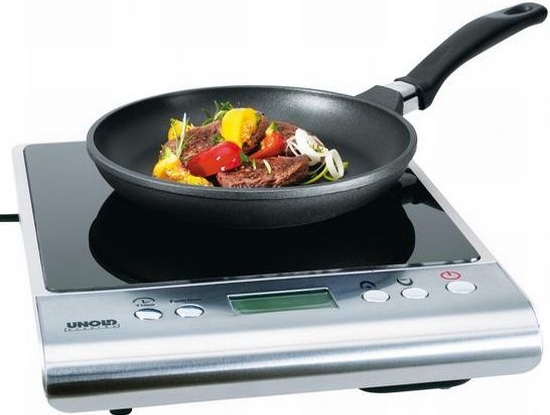
Induction Cooking - The Safer, Saner, Smarter Way to Cook

With induction cooking, energy is supplied directly to the cooking vessel by the magnetic field; thus, almost all of the source energy gets transferred to that vessel. With gas or conventional electric cookers (including halogen), the energy is first converted to heat and only then directed to the cooking vessel--with a lot of that heat going to waste heating up your kitchen (and you) instead of heating up your food. (The striking image at the left shows how precisely focussed heat generation is with induction--ice remains unmelted on an induction element that is boiling water!)

As a comparison, 40%--less than half--of the energy in gas gets used to cook, whereas with induction 84% percent of the energy in the electricity used gets used to cook (and the rest is not waste heat as it is with gas). There are two important heat-related consequences of that fact: cooler kitchens: of course the cooking vessel and the food itself will radiate some of their heat into the cooking area--but compared to gas or other forms of electrically powered cooking, induction makes for a much cooler kitchen (recall the old saying: "If you can't stand the heat, get out of the kitchen."); and a cool stovetop: that's right! The stovetop itself barely gets warm except directly under the cooking vessel (and that only from such heat as the cooking vessel bottom transfers). No more burned fingers, no more baked-on spills, no more danger with children around. (The photo at the right--one of several similar ones to be found on the web--shows, like the one above, how only the cooking vessel does the actual cooking.)

DETERGENTLESS WASHERS

Just coming on the market right now are several new high-tech washing-machine designs launched that eliminate the need for detergent. These machinse works on the hydrolysis principle, where the actual water molecules are split, creating oxygen and hydrogen. The stains on the linens are attracted and retained by ions of OH-, while the clothes are sterilized by the H+ ions.

How can you minimize energy use and water pollution with your current washer?

  • Always wash a full load
  • Use ecologically minded detergent
  • Set washing machine temps on warm or cold with a cold rinse
  • As much as possible, use renewable energy sources.
  • Your dryer is the next highest enery hog after your refrigerator. What can you do to help?
  • Use the moisture sensor option on your dryer, which automatically shuts off the machine when the clothes are dry.
  • If your washer has spin options, choose a high spin speed or extended spin option to reduce the amount of remaining moisture, thus starting the drying process before you put your clothes in the dryer.
  • And of course, line dry your clothes whenever possible